Showing posts with label Scott Chiropractic and Wellness. Show all posts

Friday, September 7, 2018

How can work affect your back pain?

How Can Work Affect your Back Pain?


Back pain is one of the most common reasons people miss work, and it’s no secret that work often contributes to back pain. In recent years, several media outlets have warned the public about the pain and debilitation which results from sitting for too long. But standing for too long also imperils the back, as well as the legs and feet. Chiropractors often treat cashiers, hairdressers, nurses, security screeners, custodians, and other people who are on their feet all day, but preventive measures are necessary to stop the problem from recurring.
How Standing Affects the Back
Problems in the lower limbs will have consequences further up. When peoples’ feet are painfully swollen or their leg muscles are failing, their posture is likely to get worse. They often subconsciously tilt their pelvises in an attempt to use their back muscles to compensate for tight or overworked muscles in the pelvic region, legs, or core, putting their lower backs out of alignment and increasing wear on their facet joints. Wear to the back muscles also puts uneven pressure on the spinal discs, allowing them to become misshapen and inhibiting their function as shock absorbers.
Good Habits While Standing
Ideally, workers should be able to alternate between sitting and standing throughout the day. It’s good to switch about every half hour. While standing, it may be helpful to put one foot up on a bar. In either position, desk workers should position the top of their screens to be at eye-level and tilted slightly up. They also should also put the keyboard and mouse on the same level and stand about twenty inches away from the screen. Knees should be bent slightly and be positioned directly below the hips.
The Importance of Foot Care
To prevent lower back pain, the feet are especially important to care for. Blood pooling in the lower extremities can lead to vascular problems, which come with their own pain and can encourage bad posture. People with Chronic Venous Insufficiency should consider compression stockings. Many chiropractors now offer customized foot orthotics, which provide the feet with more support, and patients are generally discouraged from wearing flat shoes. Anti-fatigue floor mats have been shown to decrease foot and lower back pain. Patients are also advised to move their feet when turning to reach something, as opposed to twisting their torsos.
How Chiropractic Helps
Chiropractic care will likely include some sort of therapeutic exercise as well as pain relief. Squats are recommended for many patients as a way to strengthen core and leg muscles and to improve hip flexibility. Traction, either with a machine or suspension, can reverse the pressure in spinal discs. Adjustments will put joints back in place, removing pressure from the surrounding muscles and nerves. Therapeutic massages, electric muscle stimulation, and ultrasound therapy also help to reduce muscle inflammation and deliver more nutrient-rich blood to injured soft tissues.

Scott Chiropractic and Wellness

Matthew Scott, DC
5080 Virginia Pkwy Ste 550
McKinney, TX 75071
(972) 540-5445

*****This is not intended to replace the services of a doctor. It does not constitute a doctor-patient relationship. Information in this newsletter/website is for informational purposes only & is not a substitute for professional advice. Please do not use the information contained herein for diagnosing or treating any condition.

Monday, August 6, 2018

Pregnancy Aches and Pains


Pregnancy Aches and Pains: How Chiropractic Can Treat Them

Aches and pains during pregnancy are part of the experience. From the moment of conception, a woman’s body goes through a plethora of changes. During these discomforts of back pain, pelvic pain, and postural adjustments, chiropractic care is among the popular alternative medicine therapies for providing relaxation and relief.
Body aches are a common complaint throughout pregnancy. Whether the pain is affecting a specific area such as pelvic pressure, or the patient feels sciatic nerve pain in the lower back and legs, chiropractic care will help maintain spinal health and correct misaligned joints. Chiropractic is a non-invasive, safe, and beneficial way to support your body in the midst of this magical time.

Subluxations and Irritations during Pregnancy
Commonly known as joint dysfunctions, subluxations of the spine occur when two or more vertebrae become restricted and block the body’s ability to communicate with itself. Most pregnant women seek out chiropractic treatment for localized back pain, sciatica (radiating leg pain), as well as headaches, neck pain, or posture imbalances. When the body begins to gain weight in the abdomen, the muscles will work harder and a rotation of the pelvis will force the body to unnaturally adapt to additional stress that has been placed on the spine – resulting in negative joint function and poor nerve communication.
How Can Chiropractic Help?
Chiropractors are trained to locate and treat joint dysfunctions with spinal adjustments and hand manipulation. By applying a gentle, targeted movement to the body’s spinal column and extremities, the chiropractor will restore proper joint function and improve nerve communication throughout the body. Chiropractors who are trained to work with pregnant women may use adjustment tables and use techniques that avoid undesirable pressure on the abdomen. These adjustments are designed to re-establish balance and alignment to the pelvis and spine, leaving the patient pain-free and able to enjoy the remaining weeks of pregnancy.
Additional benefits of chiropractic care include:
·  Controlling symptoms of nausea
·  Reduction in time of labor and delivery
·  Potential prevention of cesarean delivery
Before seeing a chiropractor during pregnancy, it’s best to obtain your doctor’s approval first. Chiropractic care is not recommended if you’re experiencing vaginal bleeding, placenta abruption, ectopic pregnancy and/or moderate to severe toxemia.

Scott Chiropractic and Wellness

Matthew Scott, DC
5080 Virginia Pkwy Ste 550
McKinney, TX 75071
(972) 540-5445

*****This is not intended to replace the services of a doctor. It does not constitute a doctor-patient relationship. Information in this newsletter/website is for informational purposes only & is not a substitute for professional advice. Please do not use the information contained herein for diagnosing or treating any condition.

Thursday, March 16, 2017

Is your diet aging you?

Is Your Diet Aging You?

We’ve all heard the saying, “you are what you eat.” No doubt, the foods we ingest have a big impact on what we see in the mirror — and we’re not just talking about a few extra pounds around the mid-section. I’m just going to give it to you straight. Plain and simple, your diet could be (prematurely) aging you. But, here’s the good news. A few changes to your eating habits now can help to keep your skin looking youthful, and your body healthy for many years to come. It all starts with making better choices.
Want to look like a million bucks? You have to eat better.
Experts say poor quality foods (like trans fats) cause inflammation. And aging is basically a chronic inflammatory state, says Dr. Timothy Harlan, an Assistant Professor of Medicine at Tulane University, in an interview with Web MD. You can absolutely look older because you are eating crap.
Too much sugar and processed carbohydrates like pasta, bread, and baked goods — you know, everything we love — can actually damage your skin’s collagen. (Collagen is what keeps your skin springy and resists wrinkles.) These foods can also affect your overall health. They have been linked to heart disease and diabetes. If you want nice skin (and good health), you’re just going to have to eat more fruits and veggies.
This means you will need to eat less of these…
  • Anything deep-fried in oil can create (or add to) inflammation in your body. Trans-fats can raise your LDL (“bad” cholesterol) and lower your HDL (“good” cholesterol). This can increase your risk for heart disease. So stay away from the French fries and potato chips! They aren’t just bad for your skinny jeans…
  • Sugary pastries and sweets (like donuts and cookies) are packed with sugar, which may cause wrinkles, and can even lead to acne. Who wants to deal with that?
  • Fatty meats are high in saturated fats. Try to choose something leaner, like a tenderloin cut when you can. Look for ground beef that is at least 95% lean. Or better yet, choose ground chicken or turkey breast. You should also try to stay away from the processed meats like hot dogs, bacon, and pepperoni.
  • Moderate drinking might be good for your heart (the jury is still out on this), but heavy drinking revs up the aging process. Moderate drinking is defined as one drink per day for women, and two drinks for men.
Instead, choose a heart-healthy, Mediterranean-style diet.
This means eating more fruits, vegetables, whole grains, low-fat dairy, and lean protein. These foods help fight (rather than cause) inflammation and keep you looking young and fresh. Experts say we should eat whole foods, closest to their natural state. Greens like romaine lettuce, broccoli, spinach, and arugula are all great options. Tomatoes, watermelon, grapefruit, and asparagus are also good, not to mention delicious! Fish like salmon and tuna make the grade, as well as black beans, chickpeas and oatmeal.
“All foods in moderation are part of a healthy lifestyle. It is essential for your intake to be balanced. Too much or too little of anything is unhealthy and can result in decreased immune function,” says local Registered Dietician Pam Neumann, MPH, RD, LD. “Those gaps and lack of balance — combined with inadequate physical activity — can become problematic as we get older.”


Scott Chiropractic and Wellness
Matthew Scott, DC
5080 Virginia Pkwy Ste 550
McKinney, TX 75071
(972) 540-5445

Monday, March 28, 2016

Spring is upon us!


Spring is upon us! 
The month of spring is finally here and the earth is gradually sprouting to life again. Though climate changes vary depending upon location, warmer temperatures means the ground, which may have frozen over in the winter months, grows softer and more yielding to plants. To celebrate these new beginnings, many Americans turn to gardening. After all, gardening provides an opportunity to breathe fresh air, decorate your home and exercise your muscles.
If you suffer from a bad back, this can hinder your gardening abilities. However, it does not mean that you are done gardening for good. In many instances a bad back is simply your body’s way of telling you to correct your posture and be more cautious. To help you take the ache out of gardening, we gathered some safety tips to help keep your green thumb alive.

Prepare Your Body
  • Wear comfortable clothes and shoes – never garden barefoot or in sandals. You should always wear some sort of shoe that laces up and provides good cushioning and arch support. Also, it’s important to always wear socks because they absorb the moisture from sweating so you won’t slip. Protecting your feet is the first step to protecting your back.
  • Stretch before you start – gardening is a strenuous activity, so like a workout, your body needs to loosen up before you start putting it to work. Start by walking around your garden a few times and stretch before you begin. Simple stretches such as clasping your fingers together and lifting your hands high above your head and then down to your toes will help you to warm up your muscles and lubricate your joints.

Tips for Healthy Posture in the Garden
  • Don’t lift heavy objects –if you must lift something, remember to bend your knees and keep your back straight. Use a wheelbarrow to move objects where possible. In addition, wear belts that support your back if necessary.
  • Use appropriate tools – If you use gardening tools with handles that are too short or too heavy to allow you to easily reach the areas you need, you will increase the likelihood of straining your back. Instead, try using lightweight tools with long handles or extensions. You can also use a gardening belt to keep your tools easily reachable so that you’re not constantly bending over to pick them up off the ground.
  • Take breaks to stretch and rest – It’s never a good idea to stay in one position for too long, especially if you are leaning over or bending down and curving your back. It’s recommended to get up and stretch every 30 to 40 minutes. If you feel yourself getting tired, sit down and take a break after you stretch to give your back muscles a chance to recover.

Know When to Stop
If you feel pain when you’re gardening, that is your body telling you to stop. The main thing to remember when gardening with a bad back is to break up the work into manageable increments and to continue stretching your muscles throughout the process. You should stay hydrated as well. Just like an athlete needs to cool down after a workout, you should cool down when you’re done with gardening work. 

****Disclaimer: This content is solely for informational purposes and should not be substituted for medical or chiropractic advice. It is recommended that you seek professional advice by a licensed health care professional.


Scott Chiropractic and Wellness
Matthew Scott, DC
5080 Virginia Pkwy Ste 550
McKinney, TX 75071
(972) 540-5445
www.scott-chiropractic.com


Tuesday, December 8, 2015

Ways to Increase a Child's Happiness this Holiday Season


4 Great Ways to Increase a Child's Happiness this Holiday Season And it's NOT What You Think!
 
According to a study by psychologists at the University of British Columbia, children are happier to give than to receive. In this study, children were asked to give away their own treats, as well as extra treats. They showed greater happiness about sharing their own possessions. The study suggested that the act of personal sacrifice was emotionally more rewarding to the children involved. 
 
What is the best way to increase your children’s holiday cheer?  According to the research, it’s allowing them the opportunity to give.
 
 
Here are 4 great ways you and your family can give back this holiday season.
 
Childrens Happiness
1. Volunteer. If you are not in the position to give financially, there are many ways to serve and give of your time. Call a local charity and give them some hours of volunteer service. It is the best holiday therapy of all! Some example ideas would be to serve holiday dinner to the homeless, or sing Christmas carols as a family to those that do not get frequent visitors throughout the year, such as nursing homes, assisted living centers and disabled or handicapped service centers. Perhaps you can make a meal for someone that is sick or home-bound or even donate your time to babysit for a single mother.

2. Donate books. Spread your joy for books to others that like to read. Collect books that you may never read again and look for ways to give locally. You will save on shipping costs and help those in your community. Consider your local libraries, Goodwill, or Salvation Army. If shipping is not a problem, you may consider great charities such as “Books for Soldiers” or “Books for Africa”.
 
3. Deliver cookies. Baking cookies as a family is a common activity during the holiday season. Make a few extras to gift those who are serving the community by working on Christmas day. Hotels, airports, hospitals, fire stations and stores are open for business. Call ahead and check company policy before you deliver.
 
4. Give yourself. Pack up the kids for a quick holiday visit to those that matter most. Bring egg nog or hot chocolate and share a cup (…or two) with those relatives who you do not normally have the opportunity to spend extra time with during the year. Start a tradition while strengthening family bonds.
 
***Disclaimer: This content is solely for informational purposes and should not be substituted for medical or chiropractic advice. It is recommended that you seek professional advice by a licensed health care professional.
Scott Chiropractic and Wellness
Matt Scott, DC 
5080 Virginia Pkwy Ste 550
McKinney, TX 75071
 

Monday, November 30, 2015

Cold Weather Affects on Your Body

 
Cold Weather Affects On Your Body

Your teeth chatter, your body shivers, and despite all your efforts to bundle up from head-to-toe, you can’t prevent it, the cold weather has arrived. Every person reacts differently to thermal stress. Age, fitness level and underlying diseases play a major part in someone’s reaction to cold. All these reactions are an attempt by your body to preserve heat, although not a very successful one.


With cold weather comes more impaired immune systems, and that’s pretty much an invitation for the common cold. In addition, the cold weather can affect your body in ways that never crossed your mind. Besides leaving you vulnerable to viruses, here are other ways the cold weather affects your body.

Migraines – With temperature change comes the falling of barometric pressure, also known as atmospheric pressure that is most noticeable in drastic shifts of the weather and temperature. The pressure can be so intense with cold weather that it can lead to sinus issues and migraines.

Muscle and Joint Stiffness – Our bodies, which are about 70 percent water, can become more sensitive in colder weather. As temperatures drop, our bodies can lose elasticity, and it becomes harder to stretch. Colder temperatures can also cause painful changes in joint fluid thickness.

Weakened Hair and Nails – Cold temperatures can warp hair cuticles and make hair scales weak causing split ends to form while blood circulation slows down in cold weather causing your nails to become weak and brittle.

Depression – Season Affective Disorder (SAD) is a type of depression with a season pattern, occurring most often in months when there is less daylight. It is most common between the ages of 18 and 30 and affects more women than men. People with SAD may have abnormally low levels of serotonin and high levels of melatonin, which affects sleep quality and happiness.   

Vasoconstriction – When temperatures hit 50 degrees Fahrenheit, your blood vessels narrow to reduce blood flow near the body’s surface. Sometimes the blood vessels dilate and burst which causes redness and can also numb your hands.

Heat loss in cold, wet weather increases the risk for hypothermia, frost bite and other cold injuries. Heat loss can occur in warm temperatures through conduction. For those of you who live where the winters are bitter and brutal, it is important to pack on the layers when taking a trip outside. For those who experience warm winters, swimming or sitting in cool or cold water can cause the body to lose heat very quickly, so think twice before taking dip to cool down.

***Disclaimer: This content is solely for informational purposes and should not be substituted for medical or chiropractic advice. It is recommended that you seek professional advice by a licensed health care professional.
Scott Chiropractic and Wellness
Matt Scott, DC 
5080 Virginia Pkwy Ste 550
McKinney, TX 75071

Wednesday, November 18, 2015

Bunions

The Cause of Foot Bunions
A bunion is a deformity involving the big toe.  As the bunion develops you will begin to notice an enlargement on the inner side of the first toe near the metatarsal-phalangeal joint (MTP joint).  The MTP joint is where the big toe joins to the long bone of the foot.
 
As a bunion continues to enlarge you may begin to experience pain, swelling and limited range of motion in the MTP joint.  You may even develop pain due to the rubbing and friction of your bunion on the inside of constricting shoes. 
 
Most patients who suffer from bunions and many doctors who have treated those patients do not understand the actual cause of why the bunion developed in the first place.  Most doctors believe that the bunion was caused by an inward misalignment of the first metatarsal bone (the long bone on the inner side of the foot), combined with a compensatory outward deviation of the large toe.  Although this is a correct observation with a bunion deformity, it is not the true underlying cause of the bunion formation.
 
Bunion
The bunion deformity is merely the result of a more profound problem involving the entire foot structure.  There is a “normal posture” of the foot’s structure, and when that structure is maintained a bunion will not develop.

 
There are 26 bones in the foot.  Those bones all have a normal, healthy alignment that they are supposed to be in.  The primary misalignment or foot dysfunction leading up to a bunion formation develops in the hind-foot.  The hind-foot consists of two primary bones, the heel and ankle bones.  When the heel and ankle lose their healthy alignment, it causes a domino effect of misalignments into the mid-foot and fore-foot.
 
A common proposed solution for bunions in the medical world is to break the first metatarsal bone and bend it into a straightened position. The problem with this procedure is that it does nothing to improve the actual underlying biomechanical problem that caused the bunion.
 
 A better solution is to work with the entire foot to diagnose and correct the alignment of the heel and ankle and then the mid-foot and fore-foot.
 
In addition to adjusting the spine, we also work on correcting misalignments of the feet.  We do this through gentle adjustments to the foot bones.
 
Our foot patients love having their feet adjusted.  Since your feet are the foundation, having them adjusted and aligned properly will benefit your entire body.
 
 ***Disclaimer: This content is solely for informational purposes and should not be substituted for medical or chiropractic advice. It is recommended that you seek professional advice by a licensed health care professional.


Scott Chiropractic and Wellness
Matthew Scott, DC 
5080 Virginia Pkwy Ste 550
McKinney, TX 75071
972-540-5445


Monday, November 9, 2015

5 Simple Ways to Improve your Health with Gratitude


Autumn

We wish you and your family a Happy Thanksgiving season!  You will find valuable health tips in every month’s issue of our Full Body Chiropractic Newsletter.
 
We strive to provide the latest and best health information to help you meet your goals and have the well-being you deserve.  Please continue to share your testimonials, as many of you have been experiencing wonderful results with chiropractic care at our clinic.


5 Simple Ways to Improve Your Health with Gratitude

Dr. Robert A. Emmons described research he carried out with three experimental groups over 10 weeks (Emmons & McCullough, 2003):  People who expressed daily gratitude felt 25% happier. They were more optimistic about the future, they felt better about their lives, and they even exercised 1.5 hours longer per week on average.
 
Here are 5 simple ways to improve your health with gratitude.
 
1.  Keep a gratitude journal.
 
Take time first thing in the morning or last thing in the evening to write three to five things about what you are thankful for.  Keep a notebook, journal, or loose paper and a pen on your nightstand for convenience.  Reflect on the good, pure and lovely highlights of your day and transcribe them onto paper.  You will feel better and have a deeper sense of appreciation.
 
2.  Speak positively to yourself.
 
Learn to tame your “inner chatter” with only words of encouragement, edification and confidence.  Transform any self-doubt, negativity and words of disapproval such as,
Thank You

“I am not good enough or worthy” to words like “I am worth it, I am valuable, I deserve to have the best in my life.” 
 
Speaking and thinking positivity over yourself will improve your self esteem and cause you to feel better and happier about yourself.
 
3.  Surround yourself with optimists.
 
Find people that are grateful and spend quality time with them.  Chances are you are like those that you hang around with most.  This is true with attitudes.  Make sure that the people you spend the most time with are uplifting and live life in a positive light instead of an ungrateful manner.  Other people’s gratitude and positivity will rub off on you and as a result you will become a happier and healthier person.
 
4.  Listen to and read uplifting material.
 
Spend leisure time indulging in edifying material.  Books and audios that build up the inner man and make you feel good about yourself and life.  Tony Robbins, Bob Proctor, Joyce Meyer and other wonderful authors have wonderful material to encourage, motivate and promote proper thinking.
 
5.  Take time to say thank you.
 
One of the best ways to remain thankful is to tell others you appreciate them and how much they mean to you.  A simple handwritten note is a nice touch and means a lot to the one receiving it.  Picking up the phone to call someone and say “thank you” goes a long way and will cause you to feel good in the process.  As you engage in making other’s feel appreciated you will in turn reap great rewards with your own happiness and emotional health.
 

 ***Disclaimer: This content is solely for informational purposes and should not be substituted for medical or chiropractic advice. It is recommended that you seek professional advice by a licensed health care professional.


Scott Chiropractic and Wellness
Matthew Scott, DC 
5080 Virginia Pkwy Ste 550
McKinney, TX 75071
972-540-5445


Monday, October 26, 2015

A Complete Wellness Approach

A complete wellness approach is a comprehensive focus on adopting positive habits that will increase the well-being of your physical, mental, social, and spiritual self.  Quality chiropractic care is an essential aspect of your wellness plan.  Maintaining your nervous system is essential to balance other areas of your wellness plan.

Wellness plans include regular checkups with your physician and dentist, so why not your chiropractor? Chiropractic care is more than fixing bad backs and alleviating pain. Regular chiropractic care gives the patient energy and increased endurance.


People maintain their teeth and their car, but forget about their nervous system. There is a common misconception that the absence of pain means that the body is healthy. Wellness is more concerned with a higher level of thinking that requires that the patient be at their mental and physical best to get the most out of life.  Again, the nervous system brings your body up to this level through regular chiropractic care. For those who seek to live their best life through a comprehensive wellness plan, regular chiropractic care is an essential element.  


Chiropractic treatment enables your body to benefit from the rest of your wellness routine. If you are exercising regularly, chiropractic treatment enables you to do so without added pain and stiffness. If you are eating well, regular chiropractic treatments aid in a regular digestion system. Chiropractic has the ability to bring together all aspects of a wellness program so you can reap the maximum benefits from your healthy lifestyle. The result is more vitality, greater endurance, and the ability to be the best in all that you do.
 
 
 ***Disclaimer: This content is solely for informational purposes and should not be substituted for medical or chiropractic advice. It is recommended that you seek professional advice by a licensed health care professional.


Scott Chiropractic and Wellness
Matthew Scott, DC 
5080 Virginia Pkwy Ste 550
McKinney, TX 75071
972-540-5445


Tuesday, October 20, 2015

Thumb Arthritis

A Solution for Thumb Arthritis
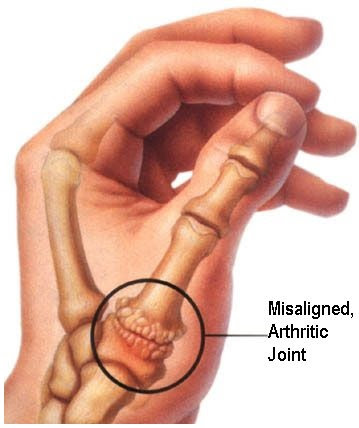
There is a tiny bone in the carpal (wrist) area known as the trapezium.  The trapezium is directly above the first metacarpal (the long bone for the thumb), where the thumb connects to the wrist.  This joint is known as a “saddle joint” because it has a unique shape similar to a horse’s saddle.  The saddle shape provides this joint a much greater range of motion compared to the other thumb and finger joints.  It is at this joint where thumb arthritis occurs.
 
Arthritis
This thumb joint is the most common joint in the entire body to become arthritic in the greatest number of people.

 
Because there is such broad motion at this “saddle joint”, it gets the heaviest workout.  We use our thumbs to grip and hold most objects, and the thumb is always opposing the four fingers.
 
The fingers oppose the thumb four against one.
 
After a period of time the thumb may lose its healthy alignment where it connects to the carpal region.  This misalignment will irritate the joint and cause the cartilage surfaces to become worn.  This wearing of the cartilage is referred to as degenerative joint disease or osteoarthritis.
 
It is a common misconception that arthritis cannot be treated through chiropractic.  Practically every patient we treat has some form of arthritis.  If you break the word down to its root meaning, arthritis means “joint inflammation”.  When two bones become misaligned relative to each other, the joint at which they connect becomes irritated and inflamed.
 
Adjusting the small wrist and hand bones will restore healthy alignment and function to the irritated joints.  In addition to pain relief patients often experience increased strength, range of motion and greater ability to grip objects for longer periods of time without pain and fatigue.
 
Arthritic pain and dysfunction can be helped with chiropractic care.  If you or someone you know is dealing with arthritic pain, we recommend a chiropractic evaluation to determine if there is a solution that can provide relief and restore healthy function to their hand.
 
 ***Disclaimer: This content is solely for informational purposes and should not be substituted for medical or chiropractic advice. It is recommended that you seek professional advice by a licensed health care professional.


Scott Chiropractic and Wellness
Matthew Scott, DC 
5080 Virginia Pkwy Ste 550
McKinney, TX 75071
972-540-5445

Monday, September 14, 2015

Heel Spurs and Heel Pain

Heel Spurs & Morning Heel Pain
Some people experience sharp, stabbing foot pain immediately upon awakening and getting out of bed.  Heel pain first thing in the morning is a sign that you may have a heel spur.
 
The morning foot pain associated with a heel spur normally lasts about 10 minutes or less before it begins to calm down; however the pain pattern may become worse over time until it eventually becomes constant.
 
Each foot has 26 movable tarsal bones which are arranged into a network of arches.  However when you lose the healthy alignment of one or more of those bones you may begin to develop foot pain.
 
Two of the most common foot conditions that develop as a result of misalignments are plantar fasciitis and heel spurs.

Plantar Fasciitis
Plantar fasciitis is a condition in which the soft tissues on the bottom of the foot (the plantar fascia) become overstretched, irritated and inflamed.  The classic symptoms associated with plantar fasciitis include pain on the bottom of the heel and sometimes into the arch of the foot.

 
Attaching from the heel to the five toes, the plantar fascia spans the entire plantar surface of the foot.  Due to misalignments of the tarsal bones and altered foot function, this tissue becomes overstretched and develops micro-tears near its attachment at the heel bone.
 
If the tarsal bones aren’t realigned in a timely fashion, the foot will begin to develop a bony heel spur near the attachment site of the plantar fascia.
 
It’s important to note that a heel spur does not cause pain by itself.  Rather it’s the irritation, micro-tearing and inflammation of the connecting plantar fascia that results in heel pain.
 
As plantar fasciitis remains untreated and is allowed to progress into a chronic condition, a heel spur may develop and continue to become larger and more prominent over time. Common symptoms associated with plantar fasciitis accompanied by a heel spur, includes morning heel pain first thing upon standing up.   
Specific chiropractic adjustments to the foot bones will correct the underlying mechanical problem, improve foot function and ease tissue stress.  Getting your feet adjusted is an effective, non-surgical solution for alleviating the pain associated with plantar fasciitis and heel spurs.
 
***Disclaimer: This content is solely for informational purposes and should not be substituted for medical or chiropractic advice. It is recommended that you seek professional advice by a licensed health care professional.

Scott Chiropractic and Wellness
Matthew Scott, DC 
5080 Virginia Pkwy Ste 550
McKinney, TX 75071
972-540-5445www.scott-chiropractic.com

Monday, August 31, 2015

Backpack Safety for School Age Children
Just like children, backpacks come in all shapes and sizes.  That's why we've created an easy to follow list when selecting the appropriate backpack.
 
Backpack Selection
1.  Choose size over style.

 
If your child wears a backpack that's too large for their frame, chances are they will haul around more than is safe for their spine
 
Use your child's back as the tape measure.  The top of a backpack should not go above your child's shoulders and the bottom of the bag should sit 1 to 2 inches above their beltline.  The width of the backpack should reach shoulder blade to shoulder blade.
 
2.  Don't over pack.
 
The first step in correctly packing a backpack is getting the right size bag as discussed in point number one.  A bag larger than a child's back is too easily overstuffed with sports equipment, toys, science projects, snacks, and if there's room, the all important books. 
 
Make sure the backpack weighs no more than 15-20% of your child's total body weight when full.
 
Begin packing the backpack by laying large, flat items at the back of the bag so they lay flat against your child's back.  Then layer smaller books and items on top.  Don't forget to utilize small pockets and compartments to better distribute the weight.  Show your child where each item is so they can re-pack properly after school.  
 
3. Use both straps.
 
Adjust both shoulder straps so the backpack fits snug against your child's back, but make sure it isn't too tight or cutting into their shoulders.  As impossible as it may seem, make sure your child uses both shoulder straps.  It's the best way to avoid spine or back injury.  Your child should be comfortable carrying a fully packed bag if it is adjusted and worn correctly.
 
If your child's backpack fits improperly or isn't worn correctly, it can lead to poor posture and eventually childhood back problems.   Make sure you select the best-fitting bag for your child to help protect their spine.
 
We encourage all parents to bring their children in periodically for chiropractic care.  Chiropractic is safe and effective for kids of all ages and it will help to maintain optimal spine posture and overall health.

***Disclaimer: This content is solely for informational purposes and should not be substituted for medical or chiropractic advice. It is recommended that you seek professional advice by a licensed health care professional.

Scott Chiropractic and Wellness
Matthew Scott, DC 
5080 Virginia Pkwy Ste 550
McKinney, TX 75071
972-540-5445
www.scott-chiropractic.com

Tuesday, August 11, 2015

Self Massage Technique for Hand Pain

Easy Self-Massage to Alleviate Hand Discomfort
If you experience stress or fatigue in your hands it wouldn’t be uncommon for most to deem it unnecessary to call in for a checkup, however it could be an indicator of an underlying hand problem. 
 
In the meantime I’d like to give you a simple self-relaxation technique you can use to relieve your hand tightness and fatigue.  Keep in mind however these relaxation techniques will not correct the underlying problem, rather it will merely provide short-term relief to help you better cope with hand symptoms.
 
To apply this self-massage technique you will use one hand to massage the other.  To avoid any confusion I will guide you through this simple technique for massaging the right hand.  You may do this on yourself as you read the instructions using your left hand to massage your right hand.
 
There are two major areas of the palm that we will focus on:Hand Massage Technique


  1. The fleshy muscle pad on the thumb side of your hand (aka thenar pad)
  2. The fleshy muscle pad on the pinky finger side of your hand (aka hypothenar pad)
There are several small muscles that make up these two prominent muscle pads on the palm surface of your hand.  Massaging these two fleshy pads periodically throughout the day can help keep your hand relaxed and functioning as you continue to work. 
 
You should use the thumb of your left hand to gently stroke the thenar pad on your right hand.  One of the best methods to work this muscle group is to stroke from the crease at the central portion of your hand (known as the palmar crease) outward toward your thumb.
 
Massage the thenar pad area for approximately 30-60 seconds and then take a short break. 
 
Now you should perform a very similar process to the hypothenar pad on the pinky side of your right hand.  Again you should work the muscle group by starting near the palmar crease and stroking outward toward the edge of your hand.  You may also massage by starting near the wrist and stroking outward toward the pinky finger.
 
Keep in mind that these massage techniques are not supposed to cause pain.  They also are not meant to diagnose or treat any hand condition you may have.  These gentle massage techniques are merely to help you temporarily relax your stressed and fatigued hands.
 
Again if you have been suffering with hand symptoms (even mild symptoms) we highly recommend that you schedule for a hand evaluation at our clinic.
 
***Disclaimer: This content is solely for informational purposes and should not be substituted for medical or chiropractic advice. It is recommended that you seek professional advice by a licensed health care professional.

Scott Chiropractic and Wellness
Matthew Scott, DC 
5080 Virginia Pkwy Ste 550
McKinney, TX 75071