Showing posts with label Bunions. Show all posts

Wednesday, November 18, 2015

Bunions

The Cause of Foot Bunions
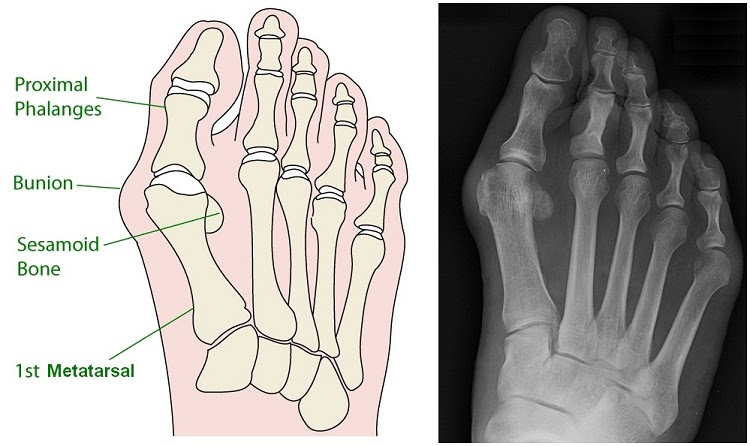
A bunion is a deformity involving the big toe.  As the bunion develops you will begin to notice an enlargement on the inner side of the first toe near the metatarsal-phalangeal joint (MTP joint).  The MTP joint is where the big toe joins to the long bone of the foot.
 
As a bunion continues to enlarge you may begin to experience pain, swelling and limited range of motion in the MTP joint.  You may even develop pain due to the rubbing and friction of your bunion on the inside of constricting shoes. 
 
Most patients who suffer from bunions and many doctors who have treated those patients do not understand the actual cause of why the bunion developed in the first place.  Most doctors believe that the bunion was caused by an inward misalignment of the first metatarsal bone (the long bone on the inner side of the foot), combined with a compensatory outward deviation of the large toe.  Although this is a correct observation with a bunion deformity, it is not the true underlying cause of the bunion formation.
 
Bunion
The bunion deformity is merely the result of a more profound problem involving the entire foot structure.  There is a “normal posture” of the foot’s structure, and when that structure is maintained a bunion will not develop.

 
There are 26 bones in the foot.  Those bones all have a normal, healthy alignment that they are supposed to be in.  The primary misalignment or foot dysfunction leading up to a bunion formation develops in the hind-foot.  The hind-foot consists of two primary bones, the heel and ankle bones.  When the heel and ankle lose their healthy alignment, it causes a domino effect of misalignments into the mid-foot and fore-foot.
 
A common proposed solution for bunions in the medical world is to break the first metatarsal bone and bend it into a straightened position. The problem with this procedure is that it does nothing to improve the actual underlying biomechanical problem that caused the bunion.
 
 A better solution is to work with the entire foot to diagnose and correct the alignment of the heel and ankle and then the mid-foot and fore-foot.
 
In addition to adjusting the spine, we also work on correcting misalignments of the feet.  We do this through gentle adjustments to the foot bones.
 
Our foot patients love having their feet adjusted.  Since your feet are the foundation, having them adjusted and aligned properly will benefit your entire body.
 
 ***Disclaimer: This content is solely for informational purposes and should not be substituted for medical or chiropractic advice. It is recommended that you seek professional advice by a licensed health care professional.


Scott Chiropractic and Wellness
Matthew Scott, DC 
5080 Virginia Pkwy Ste 550
McKinney, TX 75071
972-540-5445


Thursday, May 7, 2015

Family Gardening

Many of our patients have become more active lately by enjoying outdoor activities, sports and hobbies.  We also see a greater number of repetitive strain injuries from all the increased activity. 
 
Foot problems can begin to surface as your activity level increases.  Included in this month’s newsletter is an article on bunions and how we can help you alleviate the pain and dysfunction associated with your foot condition.  We will also share with you an important tip on proper lifting procedure to help prevent lower back injuries.
 
 
A Non-Surgical Solution for Bunions
The bunion is a misalignment deformity involving the big toe.  As the bunion develops you will begin to notice an enlargement on the inner side of the first toe near the metatarsal-phalangeal (MTP) joint where the big toe joins to the long bone of the foot.
 
As the bunion continues to enlarge you may begin to experience pain, swelling and limited range of motion in the MTP joint.  You may even have pain due to the rubbing and friction of your bunion on the inside of constricting shoes.
 
There are 26 bones in the foot.  When these bones lose their healthy alignment it may lead to the formation of a bunion.
 
Bunions
A foot surgeon will often want to break the first metatarsal bone (the long bone in the foot) and bend it so that it appears to be straightened.  The problem with this procedure is that it does nothing to improve the actual underlying problem (the structural misalignment) that caused the bunion to develop in the first place.

 
When you develop a bunion there is typically a misalignment problem involving the hind-foot and mid-foot as well as the fore-foot.  This means that the bunion problem is a full-foot condition and must be treated as such.
 
At this clinic we work with the entire foot to diagnose and correct the alignment of the heel and ankle as well as the mid-foot and fore-foot.  That ensures a quicker return to health for patients who suffer with bunions and other foot disorders.
 
We have taken our chiropractic services to a whole new level.  We also work on correcting misalignments of the feet in addition to adjusting the spine.  We do this by providing gentle adjustments to the foot bones.
 
Our foot patients love having their feet adjusted.  Since your feet act as the foundation for your legs, pelvis and spine, having them aligned properly will benefit your entire body.
#footpain