Showing posts with label Foot Pain. Show all posts

Monday, July 11, 2016

How to Treat and Recover from an Ankle Sprain

Quick Recovery From an Ankle Sprain 

Caring for a sprained ankle immediately following the injury will ensure a quicker and better recovery compared to just waiting it out.  After suffering a sprained ankle, people all too often attempt to “walk it off”.

When a sprain occurs, the heel and ankle bones become forcibly rotated into an abnormal position. These bones and joints lose their healthy alignment.  This forceful movement causes abrupt stretching and micro-tearing of the ligaments in the ankle.  As a result, the ankle will become swollen, painful and it may even bruise.

There are specific measures you should take immediately after injuring an ankle as the result of a sprain.

Ankle SprainThe first thing you should do is to apply ice over the painful, swollen areas.  You can simply apply a bag of crushed ice over the ankle and use an elastic bandage to secure the ice in place.

For more severe sprains, one of the best icing methods is to submerge the foot and ankle into an ice bath.  An ice bath can be made by filling a bucket with enough cold water to completely submerge the foot and ankle and then add several ice cubes.

In either case you should ice the affected ankle for 15-20 minutes, repeating every 60-90 minutes as needed.

Two other measures you should take after spraining an ankle is elevation and compression.

Keeping the foot elevated above the level of the heart will facilitate a quicker reduction in swelling.  At nighttime you can use a pillow to prop the foot to maintain that elevation.

Between periods of icing, an elastic bandage can be wrapped around the ankle to reduce swelling and to provide support.  Be certain to begin wrapping the elastic bandage around the foot and work upward toward the ankle.  The compression should be snug, but not too tight where circulation to the foot becomes compromised.

Very Important…

As soon as possible after an ankle sprain, you should come in to our office for a chiropractic foot and ankle evaluation.  A gentle chiropractic adjustment will reset the alignment of the heel and ankle.  Restored ankle alignment will ease the tension and pressure from the injury, allowing the body to heal and regain its function much faster.

****Disclaimer: This content is solely for informational purposes and should not be substituted for medical or chiropractic advice. It is recommended that you seek professional advice by a licensed health care professional.


Scott Chiropractic and Wellness
Matthew Scott, DC
5080 Virginia Pkwy Ste 550
McKinney, TX 75071
(972) 540-5445

Tuesday, June 7, 2016

Why do I get shin splints?

The Cause of Shin Splints 

"Shin splints" is a catch-all term for lower leg pain that is usually caused from abnormal stress to the muscles, tendons, ligaments and bones in the lower extremity.

There are a number of factors contributing to shin splints such as overpronation of the foot, inadequate stretching, wearing worn or poorly fitting shoes, or excessive stress placed on one leg or hip.  Another common finding associated with shin splints is a misalignment of the talus (ankle bone).

When you run, the talus naturally rotates relative to the tibia & fibula (the two lower leg bones).  After prolonged stress to the foot and ankle, the talus will often lose its healthy alignment becoming locked in an abnormally rotated position.  This is a misalignment problem and it causes great stress on the soft tissues between the tibia and fibula.

Shin SplintsThis talus misalignment will cause pressure between the two lower leg bones.  As a result the fibula will splay apart from the tibia.  This slight spreading apart of the two lower leg bones will cause significant stress and strain on several of the muscles and supporting soft tissues in the leg and calf.

Continued running will exacerbate this condition causing the leg pain to become unbearable.  Runners and other athletes may have to discontinue all activity for a period of time until the pain subsides.  However there is a very effective solution for shin splints without having to discontinue your activities in most cases.

Specific chiropractic adjustments to the ankle and foot joints will alleviate much of the stress on those strained leg muscles, tendons and ligaments.  When the talus regains its healthy alignment, that stretching force between the tibia and fibula becomes relaxed.

The fact that we adjust the feet and ankles is unique for chiropractors.  Where most chiropractors focus mostly on the spine, we also attract many patients for conditions involving the feet, knees and other extremity joints.  Our foot patients love getting their feet adjusted!

****Disclaimer: This content is solely for informational purposes and should not be substituted for medical or chiropractic advice. It is recommended that you seek professional advice by a licensed health care professional.


Scott Chiropractic and Wellness
Matthew Scott, DC
5080 Virginia Pkwy Ste 550
McKinney, TX 75071
(972) 540-5445

Wednesday, April 20, 2016

Arches in the foot are designed for....

FOUR Arches in Each Foot

There are 26 bones and four arches in each foot.  Those arches are designed to absorb a large majority of the shock and force from each step you take.

FOUR Foot ArchesThe average person walks several thousand steps each day.  A sedentary person may only walk a couple thousand steps but an active person could easily walk over 10,000 steps each day.

Hypothetically, imagine if you were sitting at your desk and pounded the palm of your hand on top of your desk two-thousand times every day for an entire week.  Your hand would probably become very sore.  Pounding your palms on a desk is only a fraction of the stress that your feet experience as they absorb the weight of your entire body as you walk.

It makes sense why 72% of Americans will suffer with disabling foot pain during their lifetime (according to the American Podiatry Medical Association).

When the arches of your feet are intact, you stand a much better chance of having healthy feet.  When you lose the healthy alignment of one or more of the 26 foot bones, you will begin to experience dysfunction.  Your foot is not able to absorb the shock and stress from each of those steps you take on a routine, daily basis.

Specific chiropractic adjustments to the bones and joints of the feet are crucial for optimal foot health and arch integrity.  Our chiropractic clinic focuses on adjusting the feet to improve alignment and function.

If you have a family member, friend or acquaintance who you know suffers with foot pain or other symptoms, we encourage you and thank you for telling them about us and referring them in for a chiropractic foot exam.

****Disclaimer: This content is solely for informational purposes and should not be substituted for medical or chiropractic advice. It is recommended that you seek professional advice by a licensed health care professional.


Scott Chiropractic and Wellness
Matthew Scott, DC
5080 Virginia Pkwy Ste 550
McKinney, TX 75071
(972) 540-5445

Monday, December 14, 2015

Foot Pain During The Holidays Got You Down?

Defeating Foot Pain During the Holidays
Did you know that 3 out of 4 people will suffer with foot pain and dysfunction?  The American Podiatry Medical Association has estimated that 72% of Americans will have foot pain.
 
There is a solution however to that disabling foot pain; and it doesn’t have to take a long time to experience relief. 
 
Defeating Foot PainAddressing the root cause and correcting the underlying biomechanical problem that’s responsible for your foot condition is extremely important for long-term relief and correction.
 
Most people don’t think of their chiropractor first when it comes to their foot condition.  However, don’t let that to keep you from coming in to our clinic for a chiropractic evaluation for a foot problem.
 
We take great pride in providing a higher level of care for patients’ feet than what you would typically expect.
 
There are 26 bones in each foot and these bones are aligned into four separate arches.  These four arches are designed to absorb the shock from each step.  However, when you have misalignments of one or more of those 26 foot bones, it causes great stress to the arches of the foot as well as the surrounding muscles, joints and nerves.
 
 
Foot bone misalignments will often lead to foot pain, stiffness or dysfunction is they are left untreated.
 
Here at this clinic, we adjust the tiny bones and joints in the feet, restoring function and optimal performance.  Many of our patients have suffered for years with unbearable foot pain and dysfunction and we have been able to help them immensely.
 
The foot adjustment is a gentle process, and it’s generally a pleasant experience to have your feet adjusted. Your feet will move and feel better when they are properly aligned.
 
Many of our foot patients have been referred by other satisfied patients.  Thank you for recommending others to us for their foot health.
 
***Disclaimer: This content is solely for informational purposes and should not be substituted for medical or chiropractic advice. It is recommended that you seek professional advice by a licensed health care professional.
Scott Chiropractic and Wellness
Matt Scott, DC 
5080 Virginia Pkwy Ste 550
McKinney, TX 75071

Wednesday, November 18, 2015

Bunions

The Cause of Foot Bunions
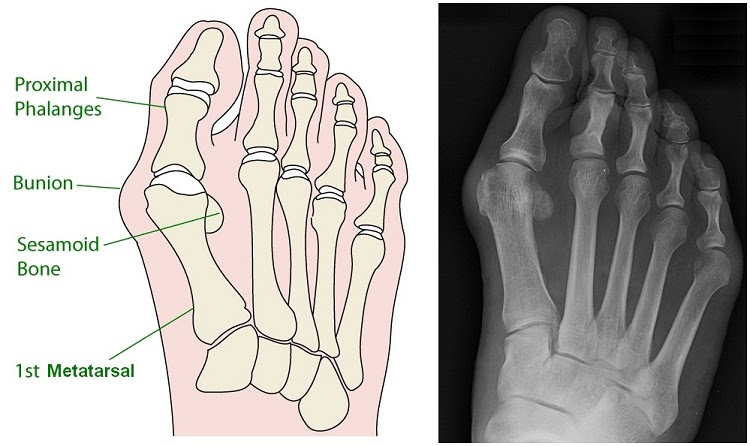
A bunion is a deformity involving the big toe.  As the bunion develops you will begin to notice an enlargement on the inner side of the first toe near the metatarsal-phalangeal joint (MTP joint).  The MTP joint is where the big toe joins to the long bone of the foot.
 
As a bunion continues to enlarge you may begin to experience pain, swelling and limited range of motion in the MTP joint.  You may even develop pain due to the rubbing and friction of your bunion on the inside of constricting shoes. 
 
Most patients who suffer from bunions and many doctors who have treated those patients do not understand the actual cause of why the bunion developed in the first place.  Most doctors believe that the bunion was caused by an inward misalignment of the first metatarsal bone (the long bone on the inner side of the foot), combined with a compensatory outward deviation of the large toe.  Although this is a correct observation with a bunion deformity, it is not the true underlying cause of the bunion formation.
 
Bunion
The bunion deformity is merely the result of a more profound problem involving the entire foot structure.  There is a “normal posture” of the foot’s structure, and when that structure is maintained a bunion will not develop.

 
There are 26 bones in the foot.  Those bones all have a normal, healthy alignment that they are supposed to be in.  The primary misalignment or foot dysfunction leading up to a bunion formation develops in the hind-foot.  The hind-foot consists of two primary bones, the heel and ankle bones.  When the heel and ankle lose their healthy alignment, it causes a domino effect of misalignments into the mid-foot and fore-foot.
 
A common proposed solution for bunions in the medical world is to break the first metatarsal bone and bend it into a straightened position. The problem with this procedure is that it does nothing to improve the actual underlying biomechanical problem that caused the bunion.
 
 A better solution is to work with the entire foot to diagnose and correct the alignment of the heel and ankle and then the mid-foot and fore-foot.
 
In addition to adjusting the spine, we also work on correcting misalignments of the feet.  We do this through gentle adjustments to the foot bones.
 
Our foot patients love having their feet adjusted.  Since your feet are the foundation, having them adjusted and aligned properly will benefit your entire body.
 
 ***Disclaimer: This content is solely for informational purposes and should not be substituted for medical or chiropractic advice. It is recommended that you seek professional advice by a licensed health care professional.


Scott Chiropractic and Wellness
Matthew Scott, DC 
5080 Virginia Pkwy Ste 550
McKinney, TX 75071
972-540-5445


Monday, September 14, 2015

Heel Spurs and Heel Pain

Heel Spurs & Morning Heel Pain
Some people experience sharp, stabbing foot pain immediately upon awakening and getting out of bed.  Heel pain first thing in the morning is a sign that you may have a heel spur.
 
The morning foot pain associated with a heel spur normally lasts about 10 minutes or less before it begins to calm down; however the pain pattern may become worse over time until it eventually becomes constant.
 
Each foot has 26 movable tarsal bones which are arranged into a network of arches.  However when you lose the healthy alignment of one or more of those bones you may begin to develop foot pain.
 
Two of the most common foot conditions that develop as a result of misalignments are plantar fasciitis and heel spurs.

Plantar Fasciitis
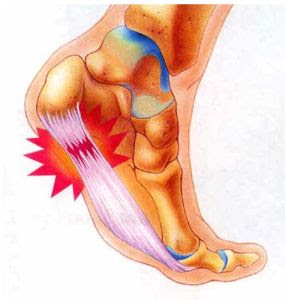
Plantar fasciitis is a condition in which the soft tissues on the bottom of the foot (the plantar fascia) become overstretched, irritated and inflamed.  The classic symptoms associated with plantar fasciitis include pain on the bottom of the heel and sometimes into the arch of the foot.

 
Attaching from the heel to the five toes, the plantar fascia spans the entire plantar surface of the foot.  Due to misalignments of the tarsal bones and altered foot function, this tissue becomes overstretched and develops micro-tears near its attachment at the heel bone.
 
If the tarsal bones aren’t realigned in a timely fashion, the foot will begin to develop a bony heel spur near the attachment site of the plantar fascia.
 
It’s important to note that a heel spur does not cause pain by itself.  Rather it’s the irritation, micro-tearing and inflammation of the connecting plantar fascia that results in heel pain.
 
As plantar fasciitis remains untreated and is allowed to progress into a chronic condition, a heel spur may develop and continue to become larger and more prominent over time. Common symptoms associated with plantar fasciitis accompanied by a heel spur, includes morning heel pain first thing upon standing up.   
Specific chiropractic adjustments to the foot bones will correct the underlying mechanical problem, improve foot function and ease tissue stress.  Getting your feet adjusted is an effective, non-surgical solution for alleviating the pain associated with plantar fasciitis and heel spurs.
 
***Disclaimer: This content is solely for informational purposes and should not be substituted for medical or chiropractic advice. It is recommended that you seek professional advice by a licensed health care professional.

Scott Chiropractic and Wellness
Matthew Scott, DC 
5080 Virginia Pkwy Ste 550
McKinney, TX 75071
972-540-5445www.scott-chiropractic.com

Monday, July 20, 2015

Tips on How to Avoid Foot Problems while Standing Around

Avoiding Foot Problems from Standing Around
Two common activities that affect the health of your feet are stance and gait.  The weight of your body pushes downward thus driving your heels and feet into the ground.
 
Don't Stand Around

Standing in one spot for several hours at a time can be especially stressful to your feet and your entire body. Common symptoms that develop may include foot pain, knee pain and lower back pain.
 
If you must stand in the same position for a prolonged period of time, we recommend that you keep your legs and feet moving periodically throughout that time. You can bend your knees, march in place, dance in place or take small steps in either direction. Moving around while standing in one spot will improve circulation and alleviate sustained pressure and stress from your feet, knees, hips and spine.
     
The healthier your feet, the better they will absorb the stress your body experiences from prolonged standing.  When the 52 bones that comprise both of your feet are in their healthy alignment, they will certainly help to protect your legs and back and reduce the potential for injuries.
 
However when your foot bones lose their healthy alignment, the feet will not do as good of job in absorbing shock while standing and walking.  This will cause greater stress on your knees, hips and spine.  Foot misalignments and dysfunction are a leading cause of back pain.
 
There are four major misalignment patterns that may affect your feet:
  1. flat feet
  2. high arches
  3. pronation (walking too much on the inside arch of your foot)
  4. supination (walking too much on the outside edge of your foot)
You may not be aware that you actually have a misalignment or structural problem in your feet.  In many cases a foot may appear to be normal at first glance, but a thorough examination could indicate differently.  Just because your feet look healthy doesn’t mean that they actually are.
 
It is our goal to provide the most complete care possible for you as our patient.  If we haven’t already evaluated your feet and you would like us to do so, please mention that to us during your next appointment.  People don’t typically think of the chiropractor first when it comes to their feet, so we appreciate you for helping us spread the word about chiropractic foot care to your friends and family.
 
***Disclaimer: This content is solely for informational purposes and should not be substituted for medical or chiropractic advice. It is recommended that you seek professional advice by a licensed health care professional.Scott Chiropractic and Wellness
Matthew Scott, DC 
5080 Virginia Pkwy Ste 550
McKinney, TX 75070
www.scott-chiropractic.com 

Tuesday, June 23, 2015

Foot Pain

72% of Americans Will Suffer With Foot Pain
This statistic is hard to believe but it’s absolutely true.  According to the American Podiatric Medical Association nearly 3 out of 4 people will develop debilitating foot pain at some point during their life.
 
The foot is comprised of 26 bones arranged into 4 arches held together by ligaments.  Foot pain is often the result of a misalignment of one or more of those 26 foot bones.  When the bones of the foot lose their healthy alignment it can cause pressure and stress on nearby nerves, muscles and ligaments.
 
Misalignments of the bones in the feet are usually the result of abnormal or excessive stress to the feet.  Think about the activities you participate in on a routine basis.  If those activities involve strenuous use of your feet, you are at risk of developing a foot condition.
 
Foot Pain

Most musculoskeletal foot problems are correctable without surgery.  Gentle chiropractic adjustments to the 26 foot bones can realign the misaligned bones which will improve foot flexibility and range of motion.  This will remove stress from the muscles, ligaments and nerves in the feet allowing your body to heal.
 
Here at this office we have taken a vast interest in correcting our patients’ foot problems.  This is rather unique in that most chiropractors focus primarily on adjusting the spine versus the extremities.  However we believe that the feet are equally important to correct when there is a misalignment or a loss of healthy function.
 
If you are experiencing stress, stiffness or pain in your feet please mention that on your next visit to our clinic.  We will be delighted to evaluate your foot condition and determine if a chiropractic foot adjustment will benefit your health.
 
Also if you know of somebody else who suffers with a foot problem we encourage you to tell them about us and refer them in for a foot evaluation.  Many people in the community are not yet aware of our unique expertise in treating foot conditions.  By helping us to spread the word we will certainly be able to help people who otherwise may never have known about this beneficial health option for their feet.
 
***Disclaimer: This content is solely for informational purposes and should not be substituted for medical or chiropractic advice. It is recommended that you seek professional advice by a licensed health care professional.
Scott Chiropractic and Wellness
Matthew Scott, DC 
5080 Virginia Pkwy Ste 550
McKinney, TX 75070
(972) 540-5445
www.scott-chiropractic.com

Monday, May 18, 2015

How to avoid Plantar Fasciitis

Keeping Your Plantar Fascia Healthy to Avoid Fasciitis!
There are 206 bones in the human body and 52 of them are in your feet.  Most people tend to take their feet for granted – walking, running, hiking, etc., until one day they’re out of commission.
 
The plantar fascia is a band of tissue that spans the surface on the bottom of your foot.  It connects from the heel to all five toes.  This fibrous tissue commonly becomes stressed and irritated during the spring months as people become more active outdoors.
 
Studies show that nearly 3 out of 4 people will suffer with disabling foot pain at some point during their lifetime.
 
Plantar fasciitis (pain at the bottom of the heel) is commonly the result of chronic misaligned bones in the foot.  When one or more of the 26 foot bones lose their healthy alignment it causes undue stress and irritation on the plantar fascia.
 
After your feet have been adjusted there are a few stretches that can be helpful in alleviating the stress your feet and plantar fascia may experience.
 
Here are two stretches that can be helpful in reducing the stress you experience in your feet while walking or running.  These two stretches are very similar to each other, but they are distinctly different in that they stretch two separate muscles.
 
Both stretches will affect the Achilles tendon and plantar fascia.  These two stretches are commonly referred to as a calf stretch or “runner’s stretch”.  The difference between the two is that one will be performed with the knee locked straight into extension and the other with the knee bent/flexed. 
 
Stretch
The first stretch with the knee extended will affect the primary calf muscle known as the gastrocnemius (photo on left).  The second stretch with the knee flexed will affect the deeper muscle known as the soleus (photo on right)

 
It is important to stretch both of these muscles on a regular daily basis, especially after prolonged periods of walking or running.  However if you experience any pain in your ankle or lower extremity while doing these stretches, you should discontinue immediately.  Pain may be indicative of a potential health problem and you should have that evaluated.
 
If you have experienced foot pain or stress and haven’t had your feet adjusted, then you may want to consider getting a checkup at our clinic this spring.  We will evaluate your feet for imbalances and misalignments of the 26 bones.
 
When there is an alignment issue or an underlying condition with the foot structure, we can often detect those problems during an examination.    
 
Disclaimer: This content is solely for informational purposes and should not be substituted for medical or chiropractic advice. It is recommended that you seek professional advice by a licensed health care professional.
Scott Chiropractic and Wellness
Matthew Scott, DC 
5080 Virginia Pkwy Ste 550
McKinney, TX 75070
(972) 540-5445


Monday, May 11, 2015

Here is the proper way to protect your back when picking up your golf ball.

Protect Your Back Using the "Golfer's Lift"
Over 80% of Americans will suffer debilitating back pain during their lifetime. This means that you have a high chance of experiencing an injury that could cost you time away from work or life as you know it.
 
Many times injuries to the spine are caused by incorrect posture, poor lifting habits and other movements you perform on a routine basis.  To help avoid a possible injury you need to ensure that you always use proper body mechanics while bending over to pick up even the lightest of objects.
 
You need to understand the potential problems that can occur from lifting while bending over.  It’s common for people to bend at their waist without bending their knees.  Bending over or lifting objects without using proper body mechanics may compromise your spine which can lead to back problems.
 
Many times it’s while someone is lifting a small, lightweight object that they experience a new injury in their lower back. It’s common for people to use caution while lifting heavy items but ignore proper posture while picking up their pen that fell to the floor.  
 
The “golfer’s lift” is a great way to reduce stress on the back while picking up small, lightweight objects.
 
Have you ever noticed professional golfers when they retrieve the ball from the hole? They often bend over while standing on one leg as the other leg swings behind them acting as a counterbalance.  Because the lower back stays relatively straight using this lifting technique, this helps prevent lower back injuries.  Think about how many times golfers bend over to pick up the golf ball. That is why this lift is commonly referred to as the golfer’s lift.
 
Here’s how to properly use the golfer’s lift in 3 easy steps.
 
Golfer's Lift


Step 1-Stand near the object as if you were going to bend over and pick it up.
 
Step 2-Hold onto something to support you as you bend over.  Golfer’s often use their club for support. A table or chair would work great as a support.
 
Step 3-As you bend over to pick up the object, bend one leg slightly (the supporting leg) and slowly lift the other leg backward as you bend over.  Try to avoid bending too far at the waist without the free leg moving with your upper torso.
 
Step 4-As you slowly come back up with the object in hand, also bring your leg down until you are standing upright..
 
If you experience pain while practicing the golfer’s lift, discontinue using this lifting method. However if that is the case you should mention that on your next appointment and we can discuss other alternatives for lifting small objects.
 
 
Disclaimer: This content is solely for informational purposes and should not be substituted for medical or chiropractic advice. It is recommended that you seek professional advice by a licensed health care professional.
Scott Chiropractic and Wellness
Matthew Scott, DC 
5080 Virginia Pkwy Ste 550
McKinney, TX 75070
(972) 540-5445

Thursday, May 7, 2015

Family Gardening

Many of our patients have become more active lately by enjoying outdoor activities, sports and hobbies.  We also see a greater number of repetitive strain injuries from all the increased activity. 
 
Foot problems can begin to surface as your activity level increases.  Included in this month’s newsletter is an article on bunions and how we can help you alleviate the pain and dysfunction associated with your foot condition.  We will also share with you an important tip on proper lifting procedure to help prevent lower back injuries.
 
 
A Non-Surgical Solution for Bunions
The bunion is a misalignment deformity involving the big toe.  As the bunion develops you will begin to notice an enlargement on the inner side of the first toe near the metatarsal-phalangeal (MTP) joint where the big toe joins to the long bone of the foot.
 
As the bunion continues to enlarge you may begin to experience pain, swelling and limited range of motion in the MTP joint.  You may even have pain due to the rubbing and friction of your bunion on the inside of constricting shoes.
 
There are 26 bones in the foot.  When these bones lose their healthy alignment it may lead to the formation of a bunion.
 
Bunions
A foot surgeon will often want to break the first metatarsal bone (the long bone in the foot) and bend it so that it appears to be straightened.  The problem with this procedure is that it does nothing to improve the actual underlying problem (the structural misalignment) that caused the bunion to develop in the first place.

 
When you develop a bunion there is typically a misalignment problem involving the hind-foot and mid-foot as well as the fore-foot.  This means that the bunion problem is a full-foot condition and must be treated as such.
 
At this clinic we work with the entire foot to diagnose and correct the alignment of the heel and ankle as well as the mid-foot and fore-foot.  That ensures a quicker return to health for patients who suffer with bunions and other foot disorders.
 
We have taken our chiropractic services to a whole new level.  We also work on correcting misalignments of the feet in addition to adjusting the spine.  We do this by providing gentle adjustments to the foot bones.
 
Our foot patients love having their feet adjusted.  Since your feet act as the foundation for your legs, pelvis and spine, having them aligned properly will benefit your entire body.
#footpain