Monday, July 20, 2015

Tips on How to Avoid Foot Problems while Standing Around

Avoiding Foot Problems from Standing Around
Two common activities that affect the health of your feet are stance and gait.  The weight of your body pushes downward thus driving your heels and feet into the ground.
 
Don't Stand Around

Standing in one spot for several hours at a time can be especially stressful to your feet and your entire body. Common symptoms that develop may include foot pain, knee pain and lower back pain.
 
If you must stand in the same position for a prolonged period of time, we recommend that you keep your legs and feet moving periodically throughout that time. You can bend your knees, march in place, dance in place or take small steps in either direction. Moving around while standing in one spot will improve circulation and alleviate sustained pressure and stress from your feet, knees, hips and spine.
     
The healthier your feet, the better they will absorb the stress your body experiences from prolonged standing.  When the 52 bones that comprise both of your feet are in their healthy alignment, they will certainly help to protect your legs and back and reduce the potential for injuries.
 
However when your foot bones lose their healthy alignment, the feet will not do as good of job in absorbing shock while standing and walking.  This will cause greater stress on your knees, hips and spine.  Foot misalignments and dysfunction are a leading cause of back pain.
 
There are four major misalignment patterns that may affect your feet:
  1. flat feet
  2. high arches
  3. pronation (walking too much on the inside arch of your foot)
  4. supination (walking too much on the outside edge of your foot)
You may not be aware that you actually have a misalignment or structural problem in your feet.  In many cases a foot may appear to be normal at first glance, but a thorough examination could indicate differently.  Just because your feet look healthy doesn’t mean that they actually are.
 
It is our goal to provide the most complete care possible for you as our patient.  If we haven’t already evaluated your feet and you would like us to do so, please mention that to us during your next appointment.  People don’t typically think of the chiropractor first when it comes to their feet, so we appreciate you for helping us spread the word about chiropractic foot care to your friends and family.
 
***Disclaimer: This content is solely for informational purposes and should not be substituted for medical or chiropractic advice. It is recommended that you seek professional advice by a licensed health care professional.Scott Chiropractic and Wellness
Matthew Scott, DC 
5080 Virginia Pkwy Ste 550
McKinney, TX 75070
www.scott-chiropractic.com 

Monday, July 13, 2015

Three Motions to Avoid with a Shoulder Condition
The shoulder is an interesting joint because it has such a broad, unrestricted range of motion.  Because of its versatility, this mobile joint may become compromised by extreme ranges of motion.  There are few movements or arm positions that are potentially dangerous if you have a preexisting shoulder problem.  In fact there are three particular positions or movements to avoid if you have had a previous shoulder condition.
  1. Working for prolonged periods with your arms overhead
  2. Reaching behind your body to lift an object
  3. Sleeping with your arms overhead
Let’s take a look at each of these potentially injurious shoulder motions.
 
Working With Your Arms Overhead
 
Working with your arms overhead for short periods is generally acceptable; however when you must work with your arms overhead for prolonged periods of time it may cause great stress and strain to the muscles, nerves and blood vessels in the shoulder region.  When this happens you may experience symptoms of numbness and tingling in your hands.
 
Reaching Behind Your Body to Lift an ObjectShoulder Motions to Avoid
 
 
Have you ever reached behind your car seat to pick something up while you were sitting in the front seat?  This type of motion compromises the shoulder joint and can lead to injury.  If you’ve ever injured your rotator cuff, this motion may be exceptionally dangerous and should be avoided.
 
Sleeping With Your Arms Overhead
 
When you sleep in this position it’s not uncommon to develop tingling or numbness sensations in your hands.  This is very similar to working with your arms overhead.  The only difference is that while sleeping with your arms overhead, your shoulders may remain in that compromising position for several hours.
 
Healthy Posture
 
The healthiest position for your shoulders is to remain in as neutral and relaxed posture and range of motion with whatever activity you are participating in.  If you must place your shoulders and arms in an awkward position, be sure to limit the time and amount of strain you exert on your shoulders while in that compromising position.
 
Chiropractic Care for Shoulder Injuries
 
Our practice has a great record of success when it comes to treating shoulder conditions.  Chiropractic adjustments to the shoulder joint and spine can relieve stress and strain from stretched, irritated or torn shoulder muscles and ligaments.  Whether you’ve had a rotator cuff injury or just a simple shoulder pain or strain, you should consider coming in for a shoulder adjustment.
 
***Disclaimer: This content is solely for informational purposes and should not be substituted for medical or chiropractic advice. It is recommended that you seek professional advice by a licensed health care professional.Scott Chiropractic and Wellness
Matthew Scott, DC 
5080 Virginia Pkwy Ste 550
McKinney, TX 75070
(972) 540-5445
www.scott-chiropractic.com

Monday, June 29, 2015

Texting Your Way to Arthritis

Texting Your Way to Arthritis
Maybe you’ve heard the term “blackberry” thumb before and wondered if that condition really existed.  There are several other condition names that have been thrown around loosely such as iPhone thumb, cell phone thumb, etc., but all of them are modern, common names for a condition known as De Quervain’s tendonitis.
 
When De Quervain’s tendonitis isn’t treated appropriately or if treatment is delayed, it may lead to the development of osteoarthritis in the joint where the thumb connects to the wrist.  It is therefore best to seek treatment for this potentially disabling hand condition sooner rather than later.
 
De Quervain’s tendonitis has been around for a long time and doctors have tried many different things in attempt to treat this painful condition.  Common treatments for De Quervain’s include anti-inflammatory prescription medications, cortisone injections and even surgery in extreme cases.
 
Texting-Thumb PainHowever there’s actually a non-surgical treatment that will not only alleviate the symptoms associated with De Quervain’s tendonitis, but also correct the underlying problem that caused the condition to develop in the first place.
 
De Quervain’s tendonitis is a painful condition that affects a couple of the most prominent tendons that control the movements of the thumb.  These tendons glide through a pulley system (or sheath) as they pass through the wrist before connecting to the thumb bone.
 
Healthy thumb movement and action requires healthy alignment of the thumb joints and wrist (carpal) bones.  When these bones and joints are aligned properly the connecting muscles and tendons will function harmoniously to provide proper thumb movement.
 
With healthy thumb and carpal bone alignment you should be able to use your cell phone or PDA device to send text messages without any pain or discomfort.  However when you lose the healthy alignment of these bones and joints, with repetitive activities such as texting and playing games on your cell phone or other device, you may begin to develop stress in the interconnecting tendons and joints.  This continued stress may lead to De Quervain’s tendonitis.
 
Once you understand the relationship between healthy thumb and carpal bone/joint alignment, it becomes apparent why chiropractic adjustments to the wrist and hand can alleviate the stress and dysfunction associated with De Quervian’s tendonitis and other hand conditions.
 
If you suffer with pain in your wrist or thumb, whether it’s related to texting, gaming or other repetitive activities, we highly recommend that you schedule an appointment with us to have your wrist and hand adjusted.
 
***Disclaimer: This content is solely for informational purposes and should not be substituted for medical or chiropractic advice. It is recommended that you seek professional advice by a licensed health care professional.

Scott Chiropractic and Wellness
Matthew Scott, DC 
5080 Virginia Pkwy Ste 550
McKinney, TX 75070
(972) 540-5445
www.scott-chiropractic.com

Tuesday, June 23, 2015

Foot Pain

72% of Americans Will Suffer With Foot Pain
This statistic is hard to believe but it’s absolutely true.  According to the American Podiatric Medical Association nearly 3 out of 4 people will develop debilitating foot pain at some point during their life.
 
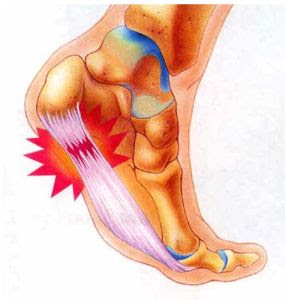
The foot is comprised of 26 bones arranged into 4 arches held together by ligaments.  Foot pain is often the result of a misalignment of one or more of those 26 foot bones.  When the bones of the foot lose their healthy alignment it can cause pressure and stress on nearby nerves, muscles and ligaments.
 
Misalignments of the bones in the feet are usually the result of abnormal or excessive stress to the feet.  Think about the activities you participate in on a routine basis.  If those activities involve strenuous use of your feet, you are at risk of developing a foot condition.
 
Foot Pain

Most musculoskeletal foot problems are correctable without surgery.  Gentle chiropractic adjustments to the 26 foot bones can realign the misaligned bones which will improve foot flexibility and range of motion.  This will remove stress from the muscles, ligaments and nerves in the feet allowing your body to heal.
 
Here at this office we have taken a vast interest in correcting our patients’ foot problems.  This is rather unique in that most chiropractors focus primarily on adjusting the spine versus the extremities.  However we believe that the feet are equally important to correct when there is a misalignment or a loss of healthy function.
 
If you are experiencing stress, stiffness or pain in your feet please mention that on your next visit to our clinic.  We will be delighted to evaluate your foot condition and determine if a chiropractic foot adjustment will benefit your health.
 
Also if you know of somebody else who suffers with a foot problem we encourage you to tell them about us and refer them in for a foot evaluation.  Many people in the community are not yet aware of our unique expertise in treating foot conditions.  By helping us to spread the word we will certainly be able to help people who otherwise may never have known about this beneficial health option for their feet.
 
***Disclaimer: This content is solely for informational purposes and should not be substituted for medical or chiropractic advice. It is recommended that you seek professional advice by a licensed health care professional.
Scott Chiropractic and Wellness
Matthew Scott, DC 
5080 Virginia Pkwy Ste 550
McKinney, TX 75070
(972) 540-5445
www.scott-chiropractic.com

Monday, June 15, 2015

101 Causes of Physical Stress and How to Maintain Your Health
Have you ever looked at yourself in the mirror while you were performing some daily activity such as talking on the phone or sitting at your desk?  If you really took the time to evaluate your body mechanics (or posture), more often than not you would probably observe a few things that you could work on.
 
From holding the phone to your ear using your shoulder as your head is bent to one side – to sleeping on your stomach as your head and neck is rotated – to crossing one leg over the other all day long, every day as you sit behind your desk – it’s no wonder why so many people need chiropractic care.
 
There are well over 101 things you encounter daily that may cause undue stress to your body.  These abnormal body postures and positions are responsible for many of the aches and pains that patients commonly develop. 
 
It would be next to impossible to maintain perfect body posture in all of your activities.  That’s one of the reasons why chiropractic care is so vitally important in keeping you and your family healthy.
 
Posture
Part of maintaining healthy alignment and body function is to keep your chiropractic appointments as recommended.  If you initially came to our office with a condition or health issue we may have recommended a specific schedule of care to correct your alignment in order to restore your health. 
 
Once your body has reached stability we recommend that you return periodically for a wellness or maintenance adjustment.  Some of our patients refer to this as getting a “tune-up”.
 
How often your body will require a wellness adjustment is relative to your specific condition.  There are many factors that contribute to your prescribed wellness plan.  Some of those factors may include your current state of health, your activity level, prior injuries, age, overall health, etc.
 
Our goal is to help you to improve your health as best possible.  Diet, exercise, and being aware of and maintaining proper body posture are all key elements to your overall health.  We encourage you to embrace your own health and do everything you can to preserve your wellness.  
 
If you ever have any questions about how to use proper posture or body mechanics with activities you commonly participate in, we would be delighted to give you the necessary advice. 
 
Also if you have a friend or family member who is suffering from a health condition that you think may be related to their life activities or stress we encourage you and thank you for referring them to us for a health evaluation.
 
***Disclaimer: This content is solely for informational purposes and should not be substituted for medical or chiropractic advice. It is recommended that you seek professional advice by a licensed health care professional.

Scott Chiropractic and Wellness
Matthew Scott, DC 
5080 Virginia Pkwy Ste 550
McKinney, TX 75070
(972) 540-5445
www.scott-chiropractic.com
 

Wednesday, June 10, 2015

Alleviate Trigger Finger and Finger Stiffness


Alleviate Trigger Finger and Finger Stiffness
There is a painful and often disabling condition known as “trigger finger”.  Trigger finger is a health problem in which one or more of the fingers will not straighten on its own.  Patients with this condition will often have to use their opposite hand to manually straighten the locked finger.
 
Other patients may experience generalized stiffness or discomfort in the joints of their fingers but not yet have a trigger finger.  Sometimes this stiffness becomes worse in the morning shortly after awakening and other times it may become more pronounced later in the day after prolonged or strenuous use of their hand.
 
If you have ever experienced pain or stiffness in your fingers, there is a good chance that Trigger Fingeryou have an underlying condition that can be corrected with gentle chiropractic adjustments to the fingers, hand or wrist.
 
Small misalignments of the hand and finger joints can occur as a result of repetitive stress or direct injury.  These misalignments place a significant amount of stress on the tiny finger joints.  This may eventually lead to pain and stiffness in the fingers and hand.
 
Conditions such as trigger finger, arthritis and hand stiffness respond extremely well to specialized chiropractic adjustments to the joints of the wrist and hand.
 
Our clinic has become known by many of the area health practitioners as the “place to go” when you’re suffering with a hand complaint.  We take great pride in offering this unique chiropractic treatment option for the hand pain sufferers in our community.
 
If you use your hands repetitively or strenuously we recommend that you ask us to check for restrictions or misalignments.  Tiny misalignments of the bones in the wrist and hand can go undetected for a long period of time before they begin to develop symptoms.  Because of that it would be beneficial to have your hands checked and adjusted periodically.

***Disclaimer: This content is solely for informational purposes and should not be substituted for medical or chiropractic advice. It is recommended that you seek professional advice by a licensed health care professional.

 
Scott Chiropractic and Wellness
Matthew Scott, DC 
5080 Virginia Pkwy Ste 550
McKinney, TX 75070
(972) 540-5445
www.scott-chiropractic.com

Monday, June 1, 2015

Why New Mothers Develop Wrist Pain

Why New Mothers Develop Wrist Pain
Have you ever held a newborn baby and cradled its little body in your arms as you held them snugly to your body?  A new mother may do this for several hours every day.
 
Cradling a baby can be hard work if you do it the wrong way.  That means there is a “right way” and a “wrong way” to hold a baby.  Mothers who hold their babies the incorrect way are likely to develop “mother’s wrist”.  Mother’s wrist is a common name associated with a wrist condition otherwise known as De Quervain’s Syndrome.
 
This condition causes significant pain or discomfort on the thumb side of the hand near the wrist.  Some mothers may even develop a small cyst (ganglion cyst) in that same area.
 
The mistake that most mothers make is that they cradle their little one in their arms without paying any attention to how their hands and wrists are positioned.  The most common problem is that the mother’s wrist is bent sideways or in a flexed position.  This position alone isn’t what causes the problem, rather it’s the incorrect position coupled with the baby’s weight for a sustained period of time.
Mommy's Wrist


Holding a baby with your wrist bent can lead to repetitive strain injuries to the hand, wrist and forearm.  It’s not difficult to change your posture to keep the wrists and hands more relaxed and protected.  You do this by maintaining your wrists in a straight, more neutral position while you cradle your baby.
 
Holding your hands in an awkward, bent position for long periods of time will commonly lead to misalignments of the tiny wrist bones (carpal bones).  De Quervain’s Syndrome or “mother’s wrist” is often associated with misalignments of one or more of the bones in the hand or wrist.
   
Gentle chiropractic adjustments to the wrist, hand and possibly even the forearm will correct the underlying biomechanical cause of De Quervain’s Syndrome and other wrist ailments that mothers often suffer from.
 
If you know someone who is dealing with hand or wrist problems please tell them about our practice.  We are making a huge difference in the health of many patients’ hands through gentle chiropractic wrist and hand adjustments. We thank you for helping us spread the word about our hand and foot expertise.
 
***Disclaimer: This content is solely for informational purposes and should not be substituted for medical or chiropractic advice. It is recommended that you seek professional advice by a licensed health care professional.
Scott Chiropractic and Wellness
Matthew Scott, DC 
5080 Virginia Pkwy Ste 550
McKinney, TX 75070
(972) 540-5445